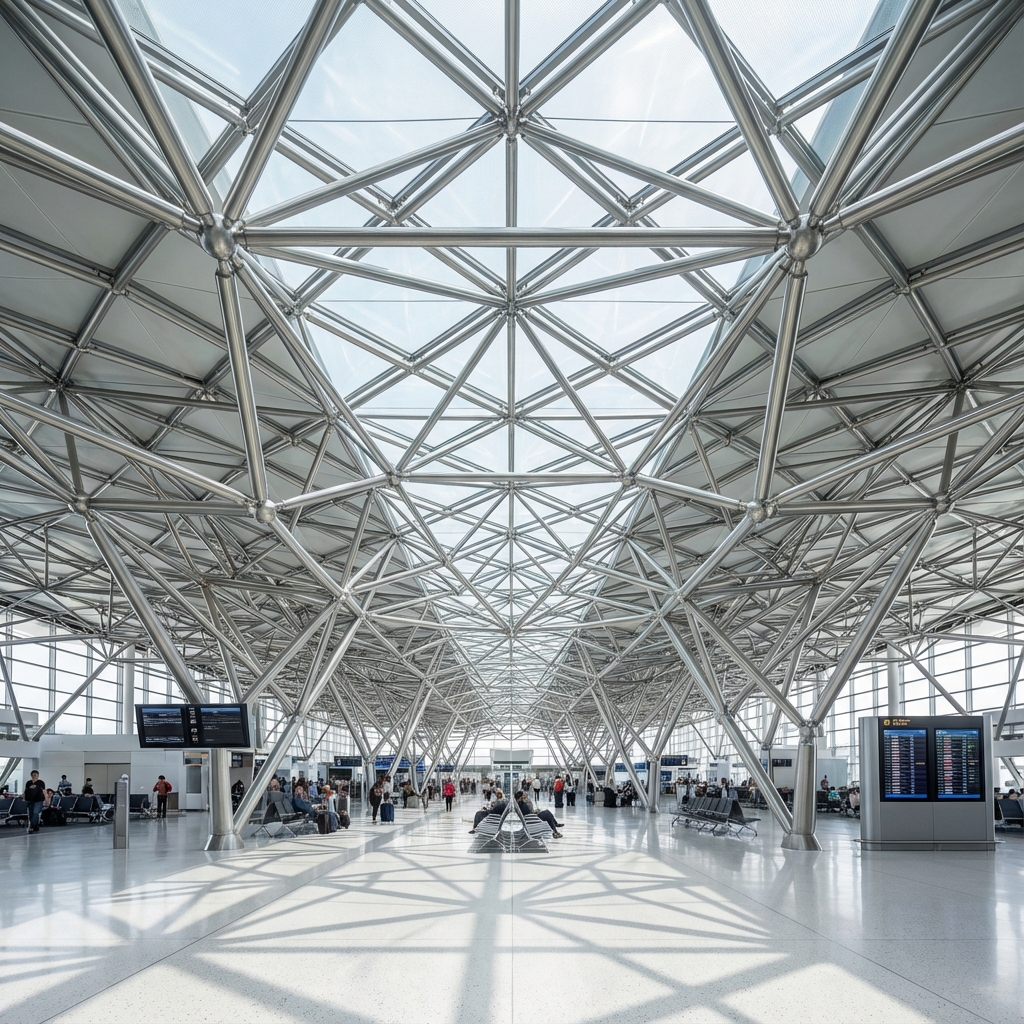
Space Frame Structure
Lightweight and rigid frameworks for large spans.
Modern Architecture
State-of-the-art design principles applied to every Space Frame Structure project we undertake, ensuring visual appeal matches structural integrity.
Industrial Strength
Built to withstand the toughest conditions with premium grade materials and world-class engineering standards.
Safety & Compliance
Rigorous adherence to international safety standards and local building codes for peace of mind.
Why Choose VK for Space Frame Structure?
Our Space Frame Structures use three-dimensional trusses to span large areas without internal supports. Ideal for airports, exhibition halls, and sports arenas, delivering both strength and futuristic geometry. The three-dimensional lattice structure distributes loads evenly in all directions, creating incredibly strong yet lightweight roofing systems with striking visual appeal.
Excellence in Action
Delivering superior infrastructure solutions across the nation.
Technical Specifications
Detailed specifications that define the capabilities of our Space Frame Structure solutions
Span Capability
Up to 120 meters
Grid Module
2m to 4m typically
Member Sizes
60mm to 300mm diameter
Weight
40-60 kg/sqm
Joint System
Bolted ball joints or welded
Coating
Hot-dip galvanized or painted
Application Areas
Industries and projects where our Space Frame Structure solutions excel
Airport Terminals
Exhibition & Convention Centers
Sports Stadiums & Arenas
Swimming Pool Enclosures
Railway Station Canopies
Auditoriums & Theaters
Shopping Mall Atriums
Warehouses with Large Clear Spans
Key Benefits
Advantages that set our Space Frame Structure solutions apart from the competition
Spans over 100 meters without intermediate supports
Highly efficient load distribution
Lightweight reduces foundation loads
Modular components enable quick assembly
Geometrically striking and visually impressive
Excellent strength-to-weight ratio
Easy to incorporate skylights and glazing
Standardized components reduce costs
Our Construction Process
A systematic approach ensuring quality at every stage of your Space Frame Structure project
Architectural Input & Space Planning
Structural Analysis & Grid Design
Connection Design
Member Fabrication
Joint Manufacturing
Surface Treatment & Coating
Foundation & Column Installation
Ground Assembly (if applicable)
Lifting or Sequential Assembly
Roofing & Cladding Integration
Final Tightening & Alignment
Quality Assurance & Handover
Frequently Asked Questions
Common questions about our Space Frame Structure solutions answered by our experts

Ready to Build Your Vision?
Contact our expert team today to discuss your requirements and get a detailed proposal for your Space Frame Structure.
Contact Us Now